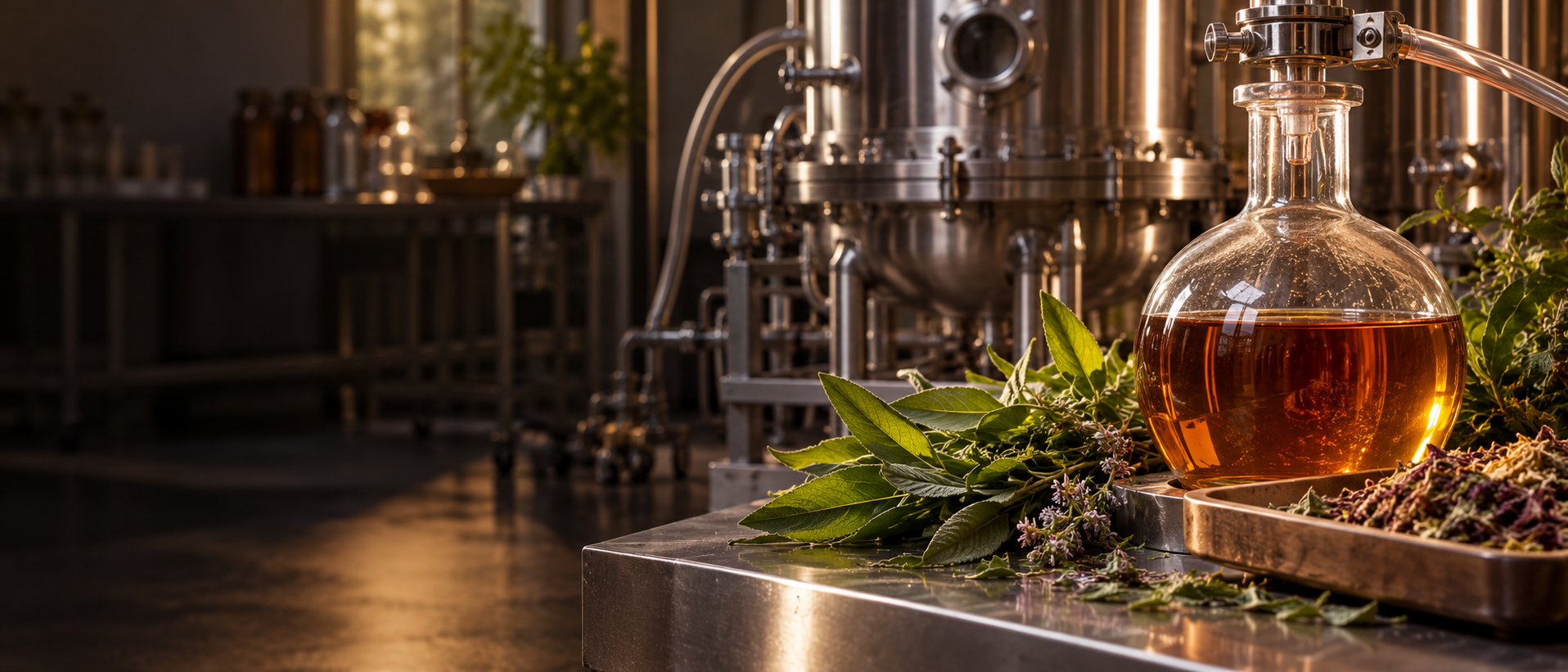
Botanical & marine extraction. Find your starting point.
Plant or marine material, composition, target extract, solvent system, solids, pH, temperature and analytical method.
01 / BOTANICAL EXTRACTION
Leaves, peel & plant materials.
Cellulase and pectinase candidates target cell-wall components in plant materials. Screen an aqueous pretreatment against your existing extraction method, measuring the desired fraction as well as total yield.
Brown, red and green seaweeds contain different polysaccharides. Match the enzyme to the material and decide whether to release an intact fraction or deliberately hydrolyse a polymer.
Evaluate target-compound recovery, dry solids, colour and unwanted co-extraction. Include separation and enzyme termination in trials before committing to scale-up.
Review these development routes with our technical team. The selected product, grade, activity, quantity and any formulation work are specified in your quotation.
01
Botanical enzyme selection
Discuss cellulase and pectinase ingredients for a defined plant matrix. We specify the activity, grade and operating window in the quotation.
Build around the feedstock and analytical endpoint. BotanicalExtract and MarineExtract are proposed development labels; composition and supply follow a defined project specification.
Compare like with like. Agree the method, controls and decision criteria before scaling up.
CharacteriseMaterial, composition and current process
→
SelectCandidate activities and operating window
→
CompareControlled trials with matched samples
→
ReviewMeasured endpoint and product quality
A USEFUL FIRST STEP
Start with a brief. Build the evidence.
Free samples are available for qualified commercial trials after an application review. Sample selection, quantity, delivery and the trial method are agreed before dispatch.
Plant or marine material, composition, target extract, solvent system, solids, pH, temperature and analytical method.
Agree the trial conditions.
Include the material, scale, pH, temperature, contact time and any existing process chemicals.
Define a useful result.
Choose the comparison, controls and measurements that will guide your next decision.
BEFORE YOU START
The details that matter.
Does higher extraction yield always mean a better extract?
No. Compare composition and unwanted co-extraction alongside the recovered quantity.
Can one enzyme treat every seaweed?
No. Marine species contain different polymers. Identify the material before choosing candidate activities.
Are custom screening studies free?
Custom extraction screening and development are quoted to scope. Qualified commercial ingredient samples can be reviewed separately.
Which enzymes are used in botanical extraction?
Cellulase and pectinase are common screening candidates for cellulose- and pectin-containing plant matrices. Selection depends on accessibility, the target extract and process conditions; a blend must be tested on the actual feedstock.
Can extraction enzymes damage the target polysaccharide?
Yes. An activity that releases a fraction may also reduce its molecular size. Specify whether the objective is intact-polymer recovery or controlled hydrolysis, then measure the relevant molecular-size and composition endpoints.
Do you offer bulk supply and tailored blends?
Send your application, required quantity, specifications and delivery destination. We will review a suitable supply or development route and provide a quotation.
APPLICATIONS. ENZYMES. EXPERTISE.
Scientific support. From Oxford to your process.
Extraction Enzymes is an application-focused website from Scientific and Technical Limited, based at John Eccles House, The Oxford Science Park, Oxford, UK. We supply enzyme ingredients and support customers selecting and evaluating activities for their application.